

 photo credit: Shandra Back
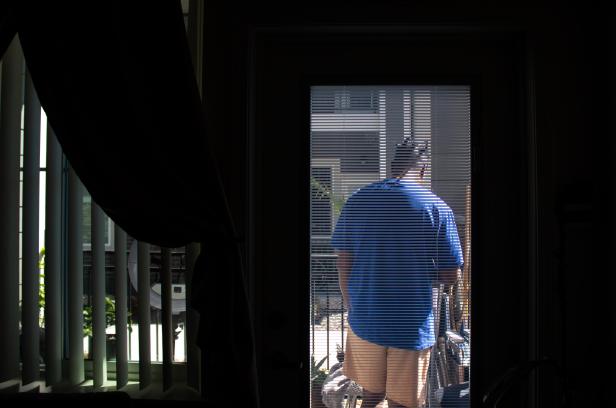
Jerry stands on his balcony in his home in Sebastopol.
Across Sonoma County, immigrant communities are feeling the strain and many are slipping further into the shadows as immigration actions under the Trump Administration intensify.
As part of our on-going series on immigration, we’re listening to personal stories to understand what they're facing.
Jerry, a Haitian asylum seeker, leans back on his couch in his home in Sebastopol. The space is spotless, shiny and white. Everything is clean and in its place.
He says life is supposed to be like this. Calm and orderly.
Life used to be like this in Haiti. He tells stories of weekends, barbequing with friends and taking his kids to the beach.
“In Haiti I had a perfect life,” Jerry says. “But things have changed.”
He’s living a calm life now in the United States. Jerry’s eyes flick over to the TV screen. As long as he doesn’t watch the news anymore, he says.
Jerry says his migration journey is shaped by a simple search: for peace and a place where his children can grow up without fear.
Yet as immigration enforcement intensifies across the United States, many immigrant families in Sonoma County are retreating further into the shadows. Jerry is one of them, trying to hold onto the fragile calm he’s found here, even as the past keeps finding ways to follow him.
A calm life becomes a fight for survival
In Haiti, Jerry lived in a small neighborhood nestled in the mountains above the capital city of Port‑au‑Prince. From his window, he could watch airplanes take off along the tarmac and city lights flicker at night. He remembers the cold mountain air, the fruit trees, the weekend trips to the beach just thirty minutes away. A full and simple life.
He always thought of his view overlooking the city as pleasant. Until the day it saved his life.
As gang activity intensified in the early 2000s, word spread that armed men were climbing the mountain. Jerry says the warning came through a WhatsApp group of neighbors telling each other to run before nightfall.
Police tried to hold the line, but they were outnumbered. Jerry remembers the sound of gunfire echoing through the valley, the shouts of neighbors running, the bodies hitting the ground.
“People died,” he says. “Kids, elderly, everyone dying.”
He and his family fled into the forest, leaving behind their home, their belongings, the life they knew. Jerry says when gangs find you, they give you two choices: join or die. But he’s a Christian, he says. He will never pick up a gun.
That alone put a target on his back.
For years, the family moved around the small country, trying to stay ahead of the violence. But the gangs kept coming. Jerry says they burned homes, emptied entire neighborhoods, and chased families from one town to the next. His mother fled too, sometimes living with relatives, sometimes sleeping in different houses each month as gangs advanced.
Eventually, the gangs caught up to him. Jerry was riding his motorcycle with his children when two men in masks stepped into the road. They hit him in the back with the butt of a gun. He remembers the first blow, then the second, then the third. He remembers thinking he was going to die.
He woke up in a hospital. That was eleven years ago. The pain still follows him. Some mornings, he can’t walk. He keeps a wheelchair on the balcony for the days his legs won’t hold him.
On his phone, he scrolls through WhatsApp photos of former neighbors who’ve been mutilated or killed. Then he shows a picture of his brother, both front teeth are gone.
“That was last week,” he says.
Jerry knew he had to leave Haiti — for his own survival, and for his children.
A new country, a new language.
In the mid‑2010s, when Jerry was planning his escape from Haiti, Chile had one of the most open immigration policies in South America. Tens of thousands of Haitians arrived during that decade. Jerry, his wife, and their three children were among them.
When Jerry steps onto the streets of Santiago for the first time, he tries to anchor himself by reading the street signs. He can’t.
“I didn’t speak the language,” Jerry says. “I didn’t understand Spanish, nothing, in Spanish.” Jerry spoke in Spanish during the interviews. All quotes are translated.
He remembers walking slowly down the sidewalk, holding his phone out in front of him, letting Google Maps guide him to the motel address he’d saved back in Haiti.
Google Maps becomes his lifeline. It helps him find that first motel. It helps him map out schools for his kids. It helps him find a job.
For a while, it feels like the beginning of a new life. Jerry and his wife enroll in language classes. They find work. They rent an apartment. Their youngest child was born. He sends money back to his mother in Haiti, who is still moving from house to house as gangs advance.
But then, slowly, the ground shifts.
On his way to work in the mornings, buses begin passing him by. At first he thinks it’s a mistake. Then one day he flags a driver down and asks why.
“Because you’re Black” the man tells him. “Chile is for white people.”
His children start coming home from school terrified. Groups of students begin bringing knives and guns to class. Kids saying they want to kill the Black children. His oldest daughter is cornered by classmates who try to fight her because of her skin color. Jerry and his wife try to report it.
Police tell them, “If you don’t like it, go back to your country.”
The discrimination follows them everywhere — in stores, on the street, even in their own apartment complex.
Then the violence escalates.
One afternoon, Jerry is walking home from work with a friend when a teenager steps in front of them and pulls out a gun. When Jerry’s friend refuses to hand over his money, the boy shoots him in the leg.
Jerry remembers the shock of it. The way the boy didn’t flinch. The way the street kept moving around them, as if this kind of thing had become normal.
“Oh my goodness,” he says. “I felt so sad.”
Chile had been the place he thought he could finally breathe. But now, he says, it felt like the nightmare was repeating itself. Again, peace felt out of reach.
He and his wife begin to plan again. They save money. They talk late into the night about where they could go next. Somewhere their children could go to school without being threatened. Somewhere they could walk outside without being targeted. Somewhere they could start again.
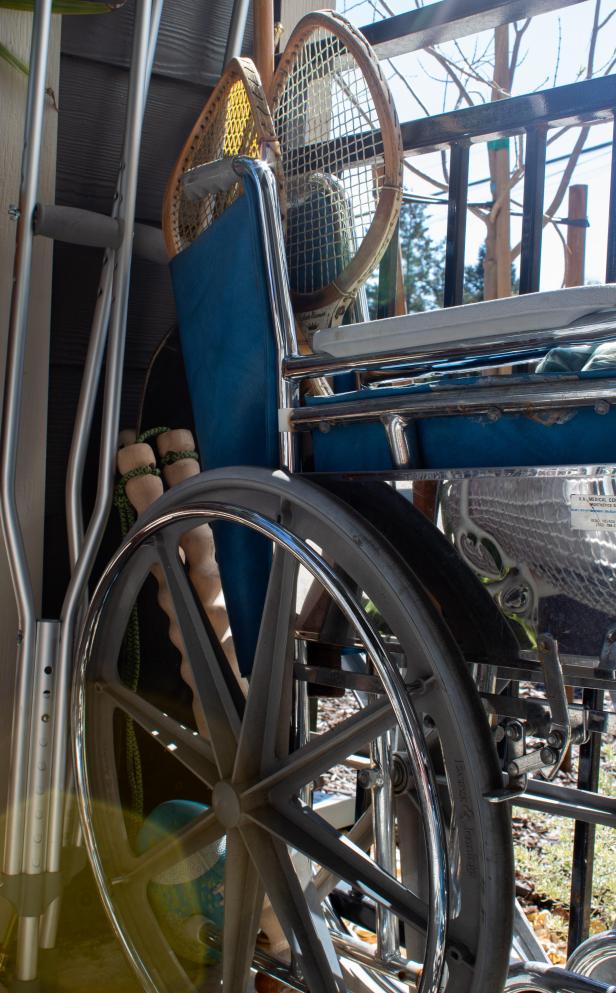 photo credit: Shandra Back
Jerry's wheelchair and crutches sit propped up on his balcony.
A fragile peace in Sonoma County
Jerry and his family flew to Mexico and waited for permission to enter the United States. When they finally crossed, they landed in Georgia, where his sister‑in‑law lived. Jerry felt safe there, but his children — now Spanish speakers — struggled in English‑only schools. They couldn’t understand their teachers. They couldn’t even ask to use the bathroom.
He couldn’t put them through another round of starting over.
So he thought about where they could go that spoke the language they already knew. A cousin in Sonoma County told him to come west.
When Jerry saw Sebastopol for the first time, he felt something he hadn’t felt in years: peace.
“It’s so calm,” he says.
Quiet. Safe. His children’s teachers spoke English and Spanish. They made friends. They began to rebuild again.
Jerry found work at a local hospital, helping elderly patients bathe, eat, and move through their day. He says there’s no discrimination there. Everyone respects each other.
Again, life began to rebuild. And again, things shifted.
Jerry began to see news footage of immigration agents smashing car windows in Southern California, dragging people into vans. In Minnesota, he saw Black immigrants targeted. What haunted him most were the masks. In Haiti, the men who killed and kidnapped wore masks too.
The past, he says, keeps finding him.
In Haiti, he couldn’t walk the streets because gangs were chasing him. In Chile, he was robbed in public. And now, in the United States, he doesn’t walk outside anymore either.
“If you are living and you think that when you go outside people might come to hit you or kill you… that is not a life,” he says.
So he stays inside, holding onto the quiet he’s built in Sebastopol. “I don’t want to die and leave my son without someone to take care of him.”
After everything, he says, he can’t die now. His children need him.
Jerry is waiting again — hoping this time will be different than Haiti, different than Chile. Hoping the United States will remember it is a nation of immigrants.
“The problems won’t last forever,” he says. “Peace will come. I believe that.”

 NPR
NPR Spotify